
Australia’s gold industry: a bigger economic story than most realise
Australia’s gold industry is often discussed in terms of production and price movements. But the real story runs much deeper. It is a story of local business growth, employment, public revenue and long-term economic stability, and new data is helping to show just how significant that contribution has become.


Gold’s growing national importance
At a national level, gold is now one of Australia’s most valuable export commodities. In 2024, gold export earnings reached A$35.7 billion, accounting for 5.5% of Australia’s total exports, up from A$32.9 billion the year before .
Australian Government forecasts suggest this role is set to expand further. The Department of Industry’s Resources and Energy Quarterly projects gold export earnings to reach A$69 billion in 2025–26 and A$74 billion in 2026–27, driven by sustained global demand and price strength .
In practical terms, this places gold alongside iron ore and LNG as one of the country’s most important export pillars.

What that means for public finances
Gold’s value directly supports government revenue and a range of public services. In Western Australia alone, gold royalties delivered A$518.6 million in 2023–24, with collections forecast to rise to A$608.9 million in 2024–25.
These revenues flow into schools, hospitals, roads and regional development, making gold one of the most tangible contributors to everyday public life.
While national datasets tell part of the story, detailed operational data shows how gold’s value is distributed across the economy.
A recent Australia country profile compiled by the World Gold Council reveals that its member companies operating in Australia generated US$7.87 billion in in-country payments in 2024.
Of this: US$5.6 billion (71%) went to Australian suppliers, US$1.06 billion (14%) to employees, and US$1.21 billion (15%) to governments.
Strikingly, 99% of supplier spending remained within Australia, demonstrating how deeply the industry is embedded in domestic supply chains.
It is important to note that these figures reflect only a subset of companies operating in Australia. Yet even this partial snapshot reveals an industry that is fundamentally local in its economic footprint.

Jobs, skills and communities
That same data shows the human scale of the sector:
- 375,721 livelihoods supported
- 212,623 employees and 163,098 contractors
- 94% of employees are Australian nationals
- US$30 million invested in community programs
- 22% of the workforce are women
Across the broader mining sector, employment reached 303,300 people in 2023–24, highlighting the role resources — and gold in particular — play in sustaining regional economies and long-term careers.

A much bigger picture
When these national indicators and company-level insights are viewed together, the picture reinforces the scale and consistency of gold’s contribution to the Australian economy.
The full scale of the sector’s contribution is likely even larger than the available data suggests. But already, the evidence shows an industry that keeps wealth in Australia, supports hundreds of thousands of livelihoods, strengthens public finances, and anchors regional development.
For a country navigating energy transition, population growth and shifting global trade dynamics, the gold industry’s role in economic stability is essential.
-
GIG
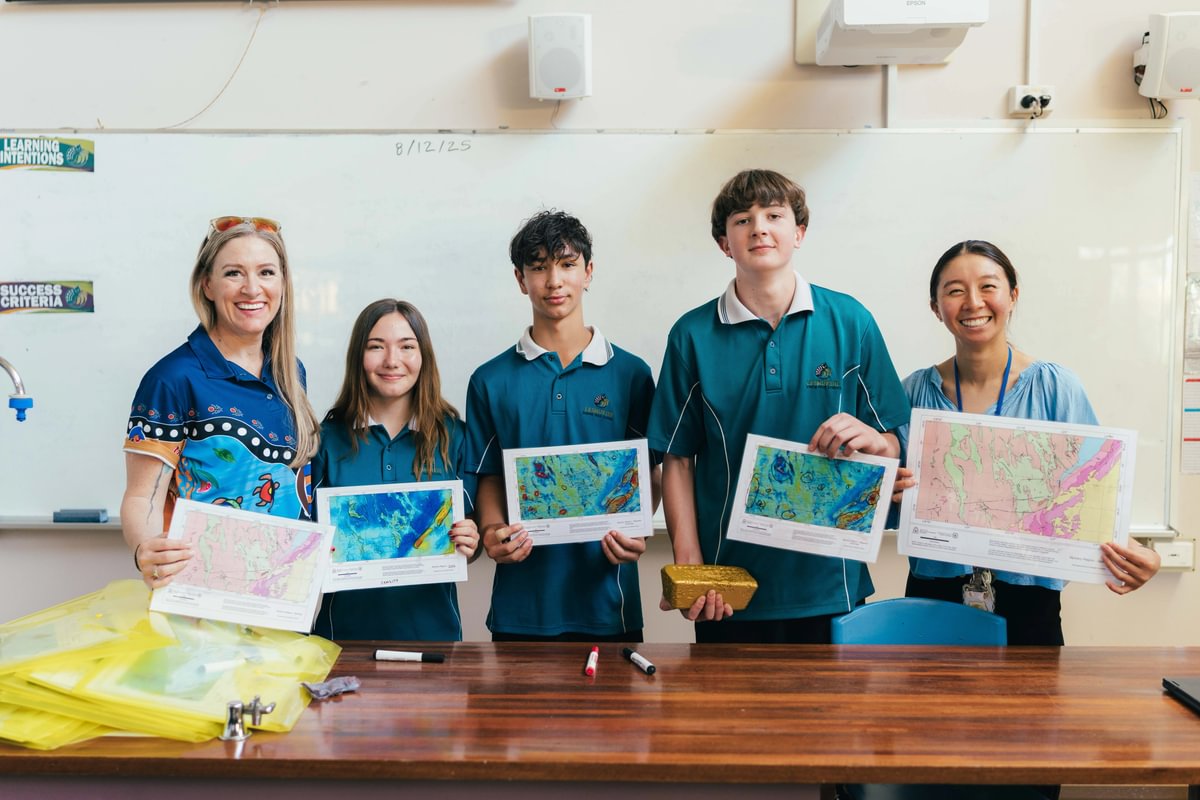
From Classroom to Career: Building Gold Industry Pathways
What an incredible opportunity to showcase the Heart of Gold town to the West Coast Fever. From meaningful community connections… -
GIG

Fever in the Heart of Gold
What an incredible opportunity to showcase the Heart of Gold town to the West Coast Fever. From meaningful community connections… -
GIG

From Dirt to Dollars: Turning Discoveries into Shareholder Value
The Gold Industry Group launched its 2026 events calendar with a sold-out Leadership Breakfast alongside the RIU Explorers Conference in… -
Community

Gold rediscovered: the new wave of prospectors on historic ground
Across Australia’s historic goldfields, a renewed enthusiasm for gold prospecting is creating one of the most compelling grassroots movements the… -
Community

Gold – The Journey Continues premieres in Perth
The gold industry came together last week to celebrate the premiere of Gold – The Journey Continues – Australia, a…